


Immediate vs. Conventional Dentures: What's the Difference and Which Is Right for You?


A complete guide to getting dentures after tooth extraction, understanding the healing process, and choosing the right denture solution.
Losing your natural teeth can be a major life change. Whether you need to have several teeth removed or are preparing for a full-mouth extraction, one of the first questions you may have is: Will I have to go without teeth while my gums heal?
The good news is that you may have options.
Two common solutions for replacing missing teeth are immediate dentures and conventional dentures. Both are designed to restore your smile, help you speak, and improve your ability to eat. However, the timing of when they are made and fitted is quite different.
At House of Denture by Stonegate Denture Clinic, we help patients understand their denture options and make informed decisions about their oral health. With convenient locations in Etobicoke and Mississauga, our team provides personalized denture care to support you through every stage of your smile restoration journey.
In this guide, we explain the differences between immediate and conventional dentures, what to expect after tooth extraction, and how to determine which option may be right for you.
What Are Immediate Dentures?
Immediate dentures are removable dentures that are prepared before your natural teeth are extracted and placed in your mouth immediately after the extractions.
One of the biggest advantages of immediate dentures is that you do not have to leave the dental office without teeth after your extraction appointment.
Before your teeth are removed, your denturist takes the necessary impressions, measurements, and records to prepare your custom dentures. Your dental professional then coordinates the extraction appointment so the immediate dentures can be inserted once your teeth have been removed.
Immediate dentures can help you:
Maintain your smile and appearance during healing.
Avoid spending the healing period without teeth.
Support your ability to speak during the transition.
Protect the extraction areas as directed by your dental professional.
Feel more confident while adjusting to life without natural teeth.
What Happens After Getting Immediate Dentures?
Although immediate dentures provide an important benefit, it is important to understand that your mouth will continue to change after tooth extraction.
Following extractions, your gums and underlying bone naturally remodel as they heal.
This can cause your immediate dentures to become loose over time.
You may need:
Follow-up appointments and adjustments.
Denture relines to improve the fit.
Temporary soft liners or tissue conditioning.
A replacement or new conventional denture once healing is complete.
It is normal for immediate dentures to require additional attention during the healing period. This is why regular follow-up care is an important part of successful immediate denture treatment.
What Are Conventional Dentures?
Conventional dentures are custom-made removable dentures that are fitted after your natural teeth have been extracted and your gums and oral tissues have had time to heal.
Unlike immediate dentures, conventional dentures are not inserted on the same day as tooth extraction.
Your dental professional allows the extraction areas to heal before the final impressions and denture fabrication process begin.
This gives your denturist a more stable foundation to work with when designing your new dentures.
Benefits of Conventional Dentures
Conventional dentures offer several advantages:
They are made after the initial healing period.
Their fit is based on the shape of your healed gums.
They may require fewer major adjustments related to post-extraction changes.
They can be customized for appearance, comfort, and function.
They provide a new smile without requiring you to wear an immediate denture first.
However, the main disadvantage is that you may need to go without teeth during the initial healing period unless you have another temporary tooth replacement option.
The appropriate waiting period varies from person to person. Your dentist or oral surgeon will assess your healing and let you know when it is appropriate to proceed.
Immediate Dentures vs. Conventional Dentures: What's the Difference?
Both options replace missing teeth, but the main difference is when they are made and inserted.
Feature | Immediate Dentures | Conventional Dentures |
When are they made? | Before tooth extraction | After initial healing |
When are they inserted? | Immediately after extraction | Once gums have healed sufficiently |
Temporary period | Used during healing | Usually designed as the post-healing denture |
Fit changes | May require frequent adjustments | Made to fit healed tissues |
Relines | Often needed during healing | May be needed as the mouth changes over time |
Main advantage | You do not have to go without teeth | Made based on healed gum tissues |
Which is better? Neither option is automatically better for everyone. The right choice depends on your oral health, number of teeth being removed, treatment goals, budget, and personal preferences.
How Long Does It Take for Gums to Heal After Tooth Extraction?
Healing after tooth extraction is an important part of the denture process.
Although the initial healing may take a few weeks, the gums and underlying jawbone can continue changing for several months.
During this time, you may notice:
Changes in the shape of your gums.
Swelling and tenderness gradually improving.
Your dentures becoming looser.
Changes in how your dentures feel when eating or speaking.
The need for denture adjustments or relines.
There is no single healing timeline that applies to everyone. The number of teeth extracted, the condition of your gums, your general health, and the type of extraction can all influence recovery.
Your dentist or oral surgeon will monitor the extraction sites and advise when your mouth is ready for the next stage of treatment.
Do Immediate Dentures Need to Be Replaced?
Not necessarily right away, but many patients who receive immediate dentures eventually need a new conventional denture.
Why?
After teeth are removed, the jawbone and gum tissues naturally change shape. Immediate dentures are made before these changes occur, so their original fit may not remain ideal throughout the healing process.
A denture reline can help improve the fit by adding new material to the tissue side of the existing denture.
Depending on the condition of your immediate denture and how much your mouth has changed, your denturist may recommend adjustments, relines, or a new set of conventional dentures.
The goal is to maintain comfort, stability, and proper function as your mouth heals.
Can You Get Dentures Immediately After Tooth Extraction?
Yes. This is exactly what immediate dentures are designed for.
However, planning is important.
If you know that you will need teeth removed, it is best to discuss your denture options before the extraction appointment.
A denturist can assess your needs, take the necessary measurements, and coordinate with your dentist or oral surgeon to plan the treatment.
Waiting until after your teeth have been removed may limit your immediate denture options.
If you are considering full-mouth extractions, partial extractions, or replacing several damaged teeth, early planning can make the transition easier.
What If You Don't Want Traditional Removable Dentures?
Immediate and conventional dentures are not the only options available.
For some patients, dental implants may provide additional stability and support.
Depending on your oral health, jawbone condition, and treatment goals, you may wish to explore the following options.
1. Implant-Retained Dentures
Implant-retained dentures use dental implants placed in the jawbone to help secure a removable denture.
They can be a good option for people who struggle with loose dentures, particularly lower dentures that move while eating or speaking.
The denture attaches to the implants but can still be removed for cleaning.
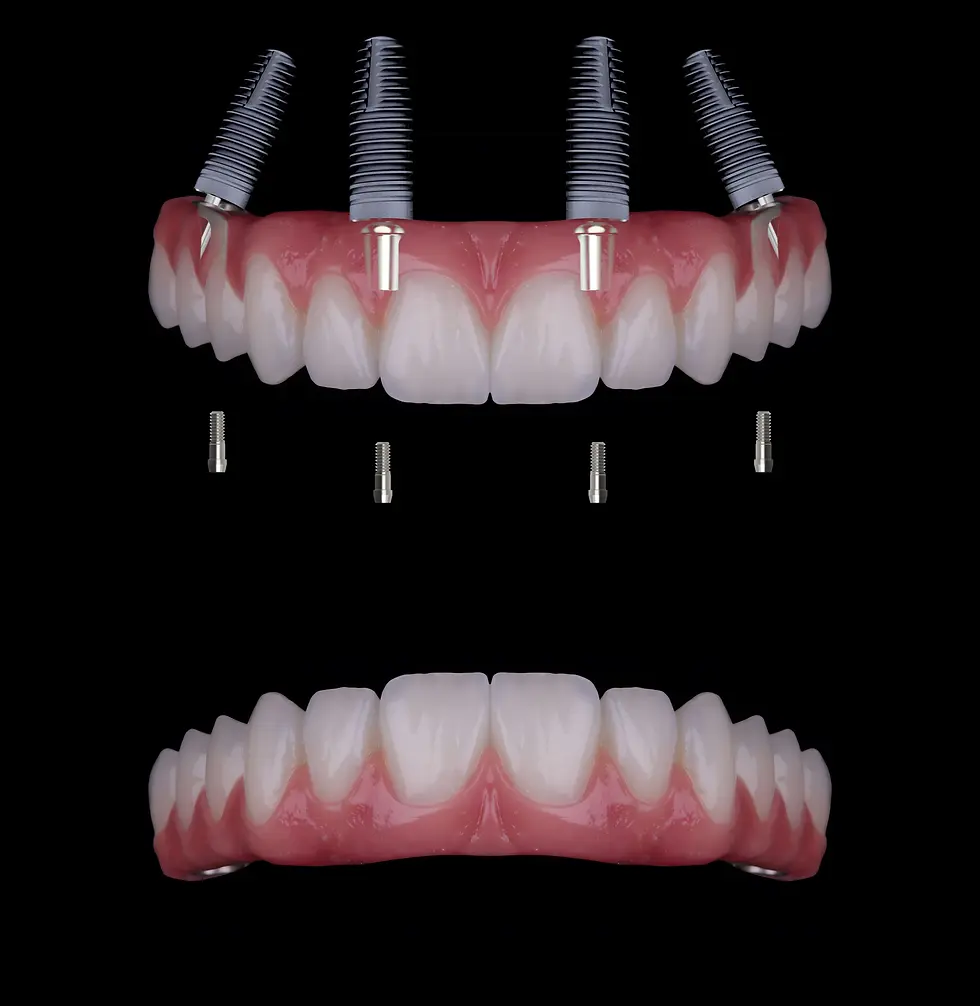
2. All-on-4 and All-on-X Dental Implants
All-on-4 and All-on-X are implant-supported full-arch tooth replacement solutions.
Instead of using a conventional removable denture, a full set of replacement teeth is supported by strategically placed dental implants.
These options may be suitable for patients who are missing most or all of their teeth and want a more stable, fixed solution.
Not everyone is a candidate. A qualified implant specialist or oral surgeon must assess your oral health, bone structure, and treatment needs.
At House of Denture, our denturists work with qualified dental professionals to help patients explore implant denture solutions.
Learn more about our All-on-X and All-on-4 treatment options and implant-retained dentures.
What If You Already Have Dentures That Don't Fit Properly?
If you already wear dentures, you may not need a completely new set.
Over time, your gums and jawbone naturally change. This can cause your dentures to become loose, uncomfortable, or unstable.
Depending on their condition, you may benefit from:
Denture reline: Improves the fit against your gums.
Denture rebase: Replaces the acrylic base while keeping suitable existing denture teeth.
Denture repair: Fixes cracks, broken teeth, or damaged denture components.
Denture adjustment: Helps relieve pressure points and improve comfort.
If your denture breaks unexpectedly, cracks, or loses a tooth, seek professional denture repair rather than attempting to fix it with household glue.
If you need urgent or emergency denture repair in Etobicoke or Mississauga, contact our team to ask about appointment availability and the repair options suitable for your denture.
Learn more about our denture repair, reline, and rebase services.
How Do You Choose the Right Dentures?
Choosing between immediate dentures, conventional dentures, and implant-supported dentures is a personal decision.
Before making your choice, consider these important questions:
Do I want to avoid being without teeth after extraction?
How many natural teeth need to be removed?
Am I comfortable wearing a temporary denture during healing?
What is the condition of my gums and jawbone?
Would I prefer removable dentures or a more secure implant-supported option?
What treatment costs and financing options are available?
A professional consultation can help you understand your options, expected timeline, and the care required at each stage.
There is no one-size-fits-all solution. Your denture treatment should be designed around your oral health, comfort, lifestyle, and expectations.
Frequently Asked Questions About Immediate and Conventional Dentures
1. Can I get immediate dentures on the same day as my tooth extraction?
Yes. Immediate dentures are prepared before your teeth are removed and are generally inserted immediately after extraction. Your dentist or oral surgeon and denturist must coordinate the treatment in advance.
2. Are immediate dentures more expensive than conventional dentures?
The cost depends on your treatment plan, the number of teeth being replaced, the materials used, and whether additional adjustments or relines are required. The best way to understand your costs is to request an individualized assessment and estimate.
3. How long do I need to wear immediate dentures?
The length of time varies depending on your healing and treatment plan. Some patients wear immediate dentures during the healing period before transitioning to conventional dentures. Your denturist will assess when adjustments, relining, or replacement may be appropriate.
4. Can I eat normally with immediate dentures?
You will likely need to start with soft foods and gradually introduce other foods as your mouth heals. Avoid putting unnecessary pressure on extraction areas and follow your dental professional's instructions.
5. Do immediate dentures look natural?
Yes. Immediate dentures are custom-made to restore your smile and can be designed to look natural. Your denturist considers tooth shape, colour, size, and overall appearance when preparing your dentures.
6. Can I get a reline for my immediate dentures?
Yes. Relines or temporary soft liners may be recommended as your gums and jawbone change during healing. Your denturist will determine the appropriate timing and type of reline.
7. Can I get dental implants after wearing conventional dentures?
In many cases, yes. Wearing traditional dentures for years does not automatically mean you cannot receive dental implants. However, your jawbone condition, oral health, and overall suitability need to be assessed by an implant specialist.
8. What is the difference between All-on-4 and regular dentures?
Regular dentures are removable and rest on your gums. All-on-4 uses dental implants to support a full arch of replacement teeth. All-on-4 is one type of All-on-X treatment, with the number of implants determined by the treatment plan.
9. Where can I get immediate dentures in Etobicoke or Mississauga?
House of Denture by Stonegate Denture Clinic provides personalized denture services at two convenient locations in Etobicoke and Mississauga, Ontario. Contact our team to discuss your treatment options and arrange a consultation.
Your Smile Journey Starts With the Right Advice
Whether you need immediate dentures after tooth extraction, conventional complete dentures, partial dentures, or are considering dental implants, understanding your options is the first step toward a comfortable and confident smile.
At House of Denture by Stonegate Denture Clinic, we believe denture care should be personal, supportive, and designed around each patient's needs.
Our experienced team provides comprehensive denture services, including:
Complete and partial dentures
Immediate dentures after tooth extraction
Implant-retained dentures
All-on-X and All-on-4 denture solutions
Denture repairs and emergency repair assessments
Denture relines and rebases
Lower suction dentures
Denture adjustments and annual checkups
We proudly serve patients in Toronto, Etobicoke, Mississauga, and surrounding communities.
Contact House of Denture today to book your complimentary consultation and discover which denture solution is right for you.
Etobicoke Location3101 Bloor Street West, Suite 206 Etobicoke, ON 416-878-9353
Mississauga Location1185 Queensway East, Unit 7 Mississauga, ON 905-803-0013
House of Denture by Stonegate Denture Clinic — Restoring your smile. Restoring your life.


Comments