


Why Does Food Taste Different With Dentures? The Surprising Connection Between Dentures and Taste


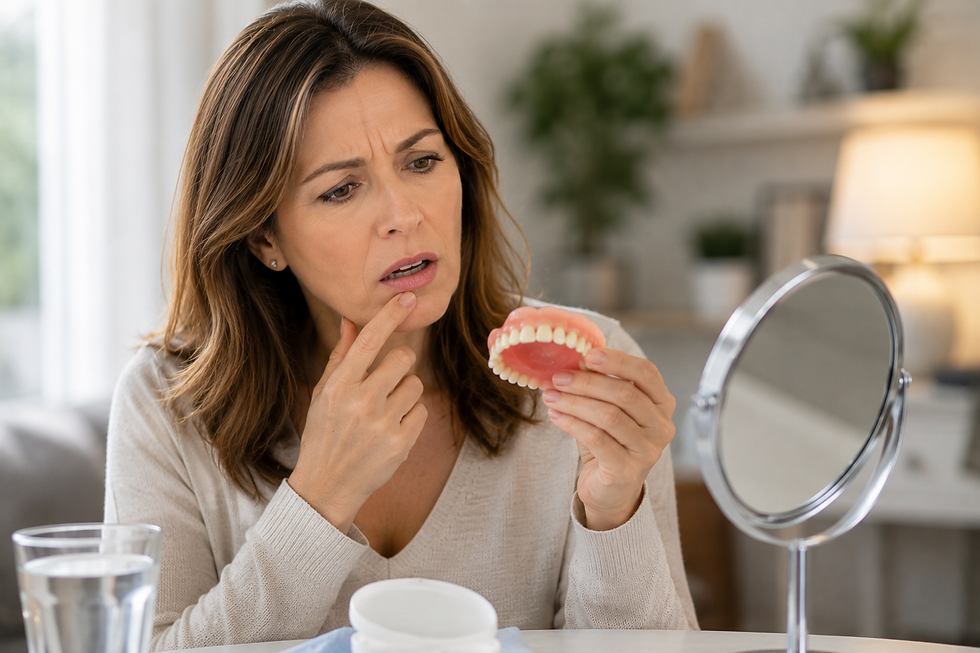
Have you ever taken a bite of a favorite food after getting dentures and thought:
“Why doesn't this taste the way I remember?”
You're not alone.
Some people notice that food seems less flavorful, temperatures feel different, or eating simply isn't as enjoyable after getting dentures—especially when adjusting to a new set.
But here's something interesting:
Your dentures don't have taste buds, so why would wearing them affect the way food tastes?
The answer involves more than your tongue. Taste, smell, saliva, temperature, texture, and even the way you chew all work together to create what we experience as flavor.
Understanding this connection can help explain why food may seem different with dentures—and when a change may be worth discussing with your denturist.
Do Dentures Actually Affect Your Taste Buds?
Most of your taste buds are located on your tongue, not on the roof of your mouth.
That means dentures don't simply “cover up” all of your taste buds.
However, enjoying food involves much more than taste buds alone.
Your brain combines several sensations when you eat, including:
Taste
Smell
Temperature
Texture
Moisture
Pressure
The way food moves around your mouth
When dentures change some of these sensations, your overall perception of flavor can change too.
This may be particularly noticeable when you're adjusting to new dentures.
1. Upper Dentures Cover Part of the Roof of Your Mouth
A conventional upper denture often covers much of the palate.
Although the palate isn't responsible for most of your taste sensation, it does help you experience temperature and texture.
Think about drinking hot coffee, eating cold ice cream, or biting into something crispy.
Part of what makes those foods enjoyable isn't simply their taste. It's the combination of flavor, temperature, texture, and sensation.
When an upper denture covers the palate, some of those sensations can feel different.
As a result, food may initially seem less intense or simply “not quite the same.”
2. Smell Plays a Huge Role in What We Call Taste
Here's something many people don't realize:
A significant part of what we experience as flavor comes from our sense of smell.
As you chew, aromas from food travel toward receptors involved in smell. Your brain combines those aromas with information from your taste buds to create the complete experience of flavor.
This is why food often seems bland when you have a stuffy nose.
Dentures don't directly eliminate your sense of smell, but changes in chewing patterns, food texture, and how comfortably you eat can alter the overall eating experience.
3. Dry Mouth Can Make Food Taste Different
Saliva is extremely important for both denture comfort and taste.
It helps dissolve food particles so they can interact with taste receptors on your tongue.
When your mouth is dry, you may notice:
Food tastes weaker or different
Difficulty chewing or swallowing dry foods
Increased friction underneath dentures
A sticky or uncomfortable feeling
Greater difficulty keeping dentures comfortable
Dry mouth can become more common with age and may also be associated with certain medications and health conditions.
If you've noticed both dry mouth and changes in taste, the two may be connected.
Persistent dry mouth should be discussed with an appropriate healthcare or oral healthcare professional.
4. Denture Adhesive May Affect the Eating Experience
Denture adhesive can be useful for some denture wearers when used appropriately.
However, using too much adhesive—or using strongly flavored products—may sometimes interfere with the natural taste and texture of food.
If you find yourself applying increasingly large amounts of adhesive just to keep your dentures stable, it may also be worth having the fit of your dentures assessed.
Adhesive should not necessarily become a substitute for addressing a denture that no longer fits properly.
5. Your Chewing Habits May Have Changed Without You Realizing It
How thoroughly you chew food affects how much flavor is released.
Someone wearing new or unstable dentures may unconsciously begin:
Taking smaller bites
Avoiding harder foods
Chewing more slowly
Chewing predominantly on one side
Swallowing foods sooner
Choosing softer foods
These changes can alter the texture, aroma, and overall experience of eating.
Sometimes what seems like a change in taste is actually a change in the way food is being chewed and experienced.
6. New Dentures Require an Adjustment Period
If you've recently received new dentures, don't be surprised if eating feels unusual at first.
Your tongue, cheeks, lips, and chewing muscles are learning how to function with a new appliance.
You may initially be very aware of the denture itself, which can distract from the normal sensations of eating.
As you become more accustomed to your dentures, eating may begin to feel increasingly natural.
However, persistent problems shouldn't automatically be dismissed as something you simply have to tolerate.
What About Implant Dentures?
For some patients, implant-supported or implant-retained dentures may provide greater stability compared with conventional removable dentures.
Depending on the treatment design, certain implant-supported options may also reduce the amount of palate coverage required.
This can make the eating experience feel different for some patients.
However, there isn't one denture design that's right for everyone. Bone condition, oral anatomy, general health, treatment goals, lifestyle, and other factors all need to be considered.
A denturist can help explain which options may be appropriate for your individual situation.
Can You Make Food More Enjoyable With Dentures?
If your dentures fit properly but you're still adjusting to changes in taste or eating sensation, a few simple habits may help.
Try:
Drinking enough water throughout the day
Taking your time while eating
Chewing food thoroughly
Experimenting with different textures
Using herbs and aromatic seasonings to enhance flavor
Maintaining good denture and oral hygiene
Cleaning your tongue regularly
Having your dentures checked if they feel loose or uncomfortable
Be cautious about simply adding large amounts of salt or sugar to compensate for reduced flavor—especially if you've been advised to limit either one.
When Should a Change in Taste Be Checked?
Not every change in taste is caused by dentures.
Changes in taste or smell can have many possible causes, including medications, dry mouth, illness, oral health changes, aging, smoking, and other factors.
Consider speaking with an appropriate healthcare professional if you experience a sudden, unexplained, significant, or persistent change in taste or smell.
And if the change seems to happen alongside denture problems—such as looseness, discomfort, difficulty chewing, or excessive adhesive use—having your dentures assessed may also be worthwhile.
Your Dentures Should Help You Enjoy Life—including Mealtimes
Eating isn't only about nutrition.
It's part of birthdays, holidays, family dinners, restaurant outings, celebrations, and everyday pleasures.
A well-designed denture should aim to restore more than missing teeth. It should support comfortable chewing, natural appearance, confidence, and everyday function.
If eating has become frustrating or food doesn't seem as enjoyable as it once did, don't automatically assume it's simply part of wearing dentures.
There may be factors worth investigating.
Looking for Denture Care in Etobicoke or Mississauga?
At House of Denture by Stonegate Denture Clinic, we provide personalized denture care designed around each patient's comfort, function, appearance, and individual needs.
Our denture services include complete dentures, partial dentures, immediate dentures, implant dentures, lower suction dentures, denture relines, repairs, and other customized denture solutions.
With locations in Etobicoke and Mississauga, our team is here to help whether you're adjusting to your first dentures, experiencing changes with an existing set, or exploring different denture options.
Has Eating Changed Since You Started Wearing Dentures?
If your dentures feel loose, uncomfortable, or are making eating more difficult than it should be, a professional denture assessment can help determine what may be happening.
House of Denture by Stonegate Denture Clinic
Helping you smile, speak, and eat with confidence.


Comments